Rich Complete Protein Chickpea Chia Smoothie
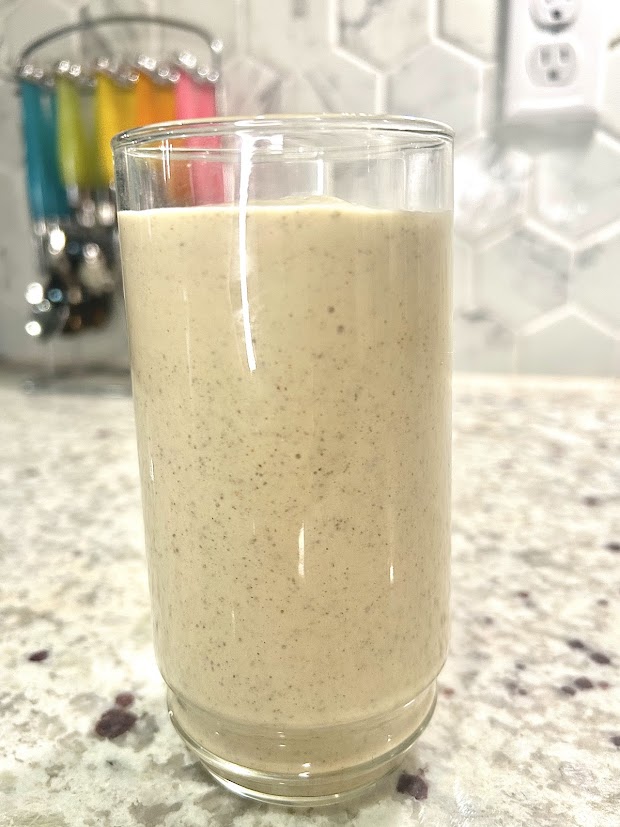
The combination of chickpeas and chia seeds makes this smoothie combination a complete protein in a drink. This is a great option for a filling and nutritious breakfast or a post-workout snack. Check out the recipe, below.
Complete Protein Chickpea Chia Smoothie Recipe

Chickpea-Chia Smoothie
Equipment
- 1 Blender
Ingredients
- 1 Frozen Banana peeled and cut
- 1/2 C Canned Chickpeas rinsed and drained
- 1/4 C Greek Yogurt
- 3/4 C Almond Milk unsweetened, vanilla
- 1 Tbsp Chia Seeds
- 2 Tbsp Peanut Butter
- 2 Tbsp Honey
- 1/2 tsp Vanilla Extract
Instructions
- Add all ingredients to a blender and blend until smooth. 1 Frozen Banana 1/2 C Canned Chickpeas 1/4 C Greek Yogurt 3/4 C Almond Milk 1 Tbsp Chia Seeds 2 Tbsp Peanut Butter 2 Tbsp Honey 1/2 tsp Vanilla Extract
- Serve immediately.
Notes
- Consider blending the smoothie at least twice to ensure all ingredients are combined.

The chickpeas combined with the chia seeds are complimentary proteins. Complimentary proteins are protein combinations that when eaten together provide all nine essential amino acids to make a complete protein. Below, complimentary protein pairing is described more in depth.
Complimentary Protein Pairing
Chickpeas are legumes. They lack a significant amount of one of the nine essential amino acids called methionine. Chia seeds are high sources of methionine, however, they are low in an amino acid called lysine. Chickpeas are high in lysine, therefore this is why they are a great pair for this recipe.
Learn more about chis seeds in this previous blog post.

Notice that peanut butter is an ingredient in this recipe, but don’t get confused. Peanuts are actually in the same family as chickpeas.
Fun fact: Peanuts are in the Leguminosae family, like chickpeas.
What is a Chickpea?
The Fabaceae or Leguminosae family is commonly known as the pea, legume or bean family. However, the terms beans and legumes have distinct meanings.
According to the Nutrition Source, “a legume refers to any plant from the Fabaceae family that would include its leaves, stems, and pods. A pulse is the edible seed from a legume plant (1).” In short, chickpeas are pulses, or the edible seed portion of the chickpea plant.

Depending on who you ask, legumes can be classified as a protein, carbohydrate, or vegetable. So, which one are they?
Classifying Legumes
The United States Department of Agriculture’s (USDA) My Plate considers 1/4 c of cooked beans to be equal to 1 oz of a protein food (2). Therefore, this is the same thing as saying 1/4 c of cooked beans being equal to 1 oz of meat.
Legumes are classified as carbohydrates because of their high carbohydrate content. In the carbohydrate exchange system for people with diabetes (which is not really used anymore) 1/2 c of cooked beans is considered 1 carbohydrate exchange.
Others consider legumes vegetables. Technically, they are a subgroup of vegetables. Eating beans doesn’t really count toward your vegetable intake. However, once you’ve consumed enough protein for the day, then they can be counted towards your servings of vegetables.
How You Can Eat More Chickpeas

If you’re not convinced about adding chickpeas to your smoothies, that’s totally understandable. There are so many other ways to incorporate them into your diet. These include, but are not limited to:
- Falafel – It is believed that this dish originated from Egypt. It is a deep fried fritter made with fava beans, chickpeas or both that is mixed with herbs and spices before frying.
- Hummus – This Middle Eastern dish is a thick spread made from ground chickpeas, sesame seeds, olive oil, lemon and garlic. You can eat it as a dip for chips, bread and even vegetables.
- Add them to your salads – Salads are an easy and nutritious way to enjoy a variety of foods. This is a particularly good option if you are allergic to nuts and want to add some crunch to your salads.
- Substitute for ground chicken – Because of their color, chickpeas are a great substitute for ground turkey or chicken as a vegan/vegetarian option in recipes. You can use them whole, or mashed.
- Chickpea Flour – This is made by grinding dried chickpeas into a fine powder. It is a popular flour used by people who require gluten-free diets.
- Pulse-based pasta – This is a type of pasta made from flour such as chickpea flours, rather than from wheat. Again, this is a popular gluten-free alternative.
Comment down below after trying this recipe or the suggestions above and let me know what you think!
DISCLAIMER: I am a medical professional, but I am not apart of your healthcare team. Always consult with your primary care physician or other medical professional of your healthcare team when making changes your your diet or lifestyle.
References
- Harvard T. H. Chan School of Public Health. (n.d.). Legumes and Pulses. The Nutrition Source. https://nutritionsource.hsph.harvard.edu/legumes-pulses/
- United States Department of Agriculture. (n.d.). Protein Foods. MyPlate. https://www.myplate.gov/eat-healthy/protein-foods